Shoulder Treatment & Surgery
Shoulder Replacement
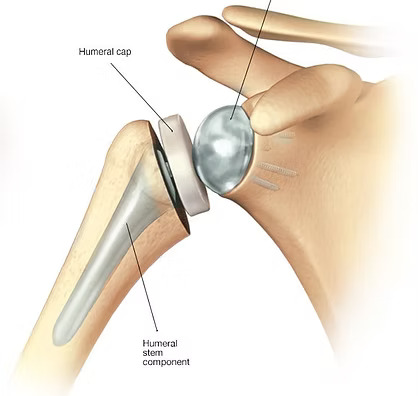
Shoulder Replacement, also known as shoulder arthroplasty, is a surgical procedure designed to alleviate pain and improve function in a shoulder joint that has been severely damaged, usually due to arthritis or a traumatic injury. During the procedure, the damaged parts of the shoulder joint are replaced with artificial components, typically made of metal and plastic. This replacement of the damaged joint surfaces aims to restore smooth and pain-free movement.
Shoulder replacement can involve replacing the head of the humerus (upper arm bone) and the socket of the shoulder blade (glenoid). The surgery can be total, involving the replacement of both components, or partial, focusing on one part of the joint. The choice of procedure depends on the extent of damage and the patient’s specific condition.
Shoulder Dislocation
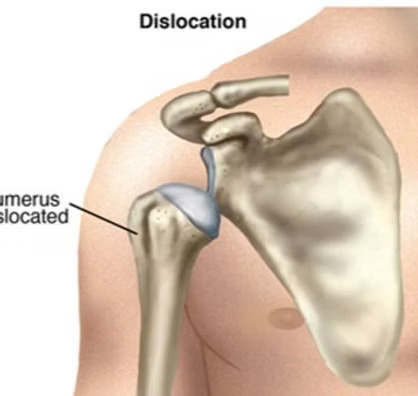
Shoulder dislocation occurs when the upper arm bone (humerus) pops out of its socket in the shoulder blade (glenoid). This typically happens due to a forceful impact, often during a fall, sports injury, or other traumatic events. Shoulder dislocations are relatively common and can result in intense pain, swelling, and a visible deformity of the shoulder joint.
Rehabilitation, involving physical therapy, is a key component of recovery after a shoulder dislocation. This helps restore strength, flexibility, and stability to the shoulder joint, reducing the risk of future dislocations. In some cases, especially if recurrent dislocations occur, surgical intervention may be considered to address underlying structural issues and prevent further instability.
Rotator Cuff Tear
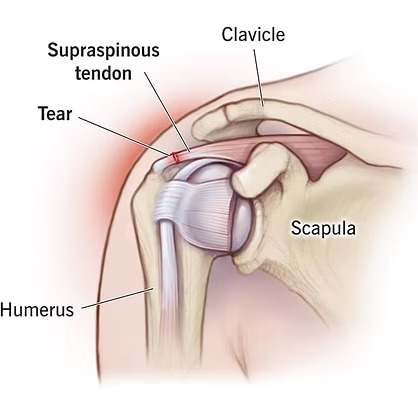
A Rotator Cuff Tear is a common injury involving damage to the group of tendons and muscles that stabilize the shoulder joint. The rotator cuff consists of four tendons that connect the muscles of the shoulder to the upper arm bone (humerus), facilitating the shoulder’s range of motion and stability. Tears in the rotator cuff can occur gradually over time due to wear and tear, or suddenly from a traumatic injury.
Symptoms of a rotator cuff tear often include shoulder pain, weakness, and a reduced range of motion. Everyday activities such as lifting, reaching, or even sleeping on the affected side can become challenging.
Shoulder Fractures
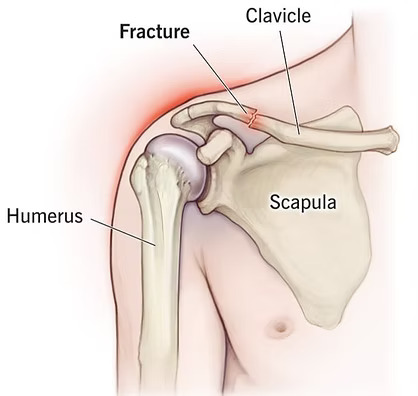
Shoulder fractures refer to breaks or cracks in the bones that make up the shoulder joint, including the clavicle (collarbone), scapula (shoulder blade), and humerus (upper arm bone). These fractures can occur due to various causes, such as falls, sports injuries, or car accidents.
Symptoms of a shoulder fracture include pain, swelling, bruising, and difficulty moving the affected arm. Depending on the severity and location of the fracture, the treatment approach may vary. Some fractures may be managed with conservative measures like immobilization using a sling, while others may require surgical intervention to realign and stabilize the broken bones.